What Should You Check Before Buying Commercial Plywood?
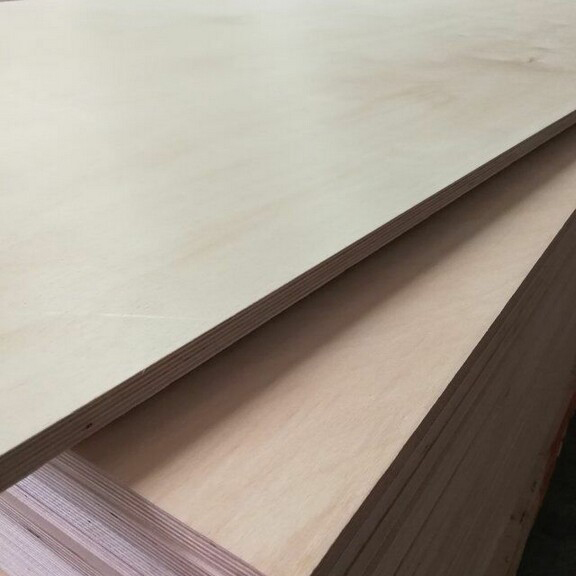
Before buying commercial plywood, check the core structure, actual thickness, veneer grade, moisture content, glue bond, flatness, formaldehyde level, machining performance, certification, and batch consistency. An 18 mm sheet should be measured at several points rather than judged by its label, while indoor panels commonly perform more consistently when moisture content is around 8–12%, depending on species and local conditions. For volume orders, inspect at least 10–20 randomly selected sheets from different packs. A low price per sheet matters less if 5% of a shipment is lost to warping, core gaps, delamination, or machining defects.
Commercial plywood is assembled from cross-laminated veneers, so its performance depends on more than the appearance of the face. Two sheets with the same 1220 × 2440 mm dimensions and 18 mm nominal thickness can contain different veneer species, ply counts, core joints, adhesive systems, and allowable defects. A 7-ply panel and an 11-ply panel may also behave differently during routing or edge fastening even when their finished thickness is similar.
Start by measuring what will enter production. Use a calibrated digital caliper at no fewer than 6 points across a sheet, keeping measurements away from damaged edges. If a furniture line is designed around 18 mm material, repeated measurements of 17.1, 17.4, and 18.0 mm within one delivery can affect groove fit, edge-banding settings, concealed hinges, and CNC programs. For a 500-sheet order, checking only one top sheet provides little information about the remaining 99.8% of the material.
Thickness should be checked together with length, width, diagonals, and squareness. A nominal 4 × 8 ft panel is commonly sold around 1220 × 2440 mm, but buyers should state acceptable dimensional tolerances on the purchase order rather than assume all mills use the same limits. Measure both diagonals on representative sheets; a difference can indicate that the panel is not square enough for automated nesting or repeated cabinet-part cutting.
Once dimensions are confirmed, inspect the exposed edges because they show how the panel was assembled. Look for open core gaps, veneer overlaps, broken inner plies, irregular glue lines, and large changes in individual veneer thickness. One intact edge is not enough. Cut samples from at least 5 sheets selected from different packs in a production lot and compare the cross-sections under good lighting.
Small natural veneer imperfections may be acceptable depending on the specification, but repeated voids near panel edges can reduce fastening consistency. This matters when screws, dowels, confirmat fasteners, or routed joints depend on continuous wood. A useful factory trial is to place fasteners at several edge positions in a sample set of 10 panels and record splitting, weak holding areas, or layers separating during insertion.
After the core, examine the face and back veneers under side lighting rather than only looking straight at the sheet. Side lighting makes sanding waves, shallow depressions, repaired areas, veneer overlaps, and surface variation easier to see. A panel intended for thin laminate, decorative veneer, paint, or visible furniture parts usually requires tighter surface control than plywood installed inside packaging or concealed construction components.
Do not accept grade names without agreed defect limits. Labels such as B/BB, BB/CC, C/D, or other commercial descriptions can be interpreted differently across suppliers and markets. A purchase specification should state the permitted number and size of patches, open knots, splits, repairs, discoloration, and sanding defects. For repeat orders, keeping 2 approved reference panels from the first accepted production batch gives inspectors a physical comparison point.
The next check is moisture. Wood veneers absorb and release moisture with changes in surrounding relative humidity, so a panel that is stable at the factory can change after transport or storage. For many dry interior applications, readings around 8–12% are often encountered, although the suitable range depends on wood species, destination climate, manufacturing process, and use. Take readings from the center and near the edges of at least 10 sheets instead of relying on one measurement.
Moisture consistency also matters between packs. If one pack averages 9% and another averages 16%, panels may not machine or acclimatize in the same way. When plywood arrives in a warehouse with substantially different temperature or humidity from the production site, allow the material to reach conditions closer to the processing environment before precision cutting, especially for cabinet components with narrow machining tolerances.
Flatness can be checked at the same stage. Lay representative sheets on a known flat surface and inspect bow, cup, and twist before cutting. For a 1,000-sheet shipment, recording flatness on 20–30 sheets distributed across multiple packs provides more useful information than checking only panels accessible at the container door. Storage also deserves attention: packs should be supported evenly and kept away from standing water or concentrated heat sources.
Bond quality comes next because a well-finished panel can still separate if the adhesive bond is unsuitable for the service condition. Plywood bond classification describes resistance of the glue bond to moisture exposure; it should not be treated as a measure of decay resistance or general structural strength. APA notes that Exposure 1 plywood is intended for limited moisture exposure rather than long-term weather exposure.
This distinction is useful when comparing products such as CDX Pine Plywood with plywood intended strictly for dry furniture interiors. The letters associated with panel grades refer to veneer quality, while the exposure classification addresses bond durability. Buyers should therefore request the applicable product standard, bond classification, veneer grade, species, thickness, and intended use on the same technical sheet instead of judging suitability from the product name alone.
Machining trials should follow specification checks because cutting exposes problems that visual inspection may miss. Take a sample of 10 sheets and perform the same operations used in production: crosscutting, ripping, CNC routing, drilling, edge profiling, sanding, screw insertion, and edge banding. Record veneer breakout, chipped edges, separated plies, rough routed surfaces, and holes that intersect core gaps.
A simple trial can also compare usable yield. If Supplier A charges 4% less per sheet but produces 7% rejected components after routing, while Supplier B produces 2% rejects under the same cutting pattern, the sheet quotation alone does not describe actual material cost. Record accepted parts per sheet, rework time, and rejected area over the same production sample before comparing suppliers.
Emission requirements need a separate review when plywood is used for regulated interior products. In the United States, EPA TSCA Title VI sets a formaldehyde emission limit of 0.05 ppm for regulated hardwood plywood made with veneer or composite cores. EPA requirements also include third-party certification for covered products and associated labeling and recordkeeping provisions.
The 0.05 ppm figure should not be applied automatically to every plywood type worldwide because product definitions and regulations differ by market. Buyers should match the test report to the exact factory, panel type, construction, production period, and applicable destination-market requirement. A report that names another factory, different core construction, or unrelated product should not be used as proof for the shipment being purchased.
The documentation review can be kept practical:
-
Match the factory name and address with the purchase order and invoice.
-
Match plywood type, thickness, core species, and grade with the supplied material.
-
Check the report date and applicable test standard.
-
Confirm that certificate numbers can be verified with the issuing organization.
-
For a lot of 2,000 sheets, connect inspection records to identifiable pack or batch numbers rather than using one generic report.
Documentation should then be compared with actual factory capability. A supplier may provide an acceptable sample yet struggle to repeat the same construction across monthly orders, so buyers should record thickness distribution, moisture readings, defect rates, machining rejects, and delivery accuracy for each batch. Even a 3% increase in rejects can equal 60 sheets in a 2,000-sheet shipment before labor and processing losses are counted.
Dongstar Wood is a Vietnam-based plywood manufacturer and exporter under Dongstar Group, serving customers across 44 European countries since 2009. We specialize in commercial plywood, film faced plywood, construction plywood, birch plywood, furniture plywood, and customized plywood solutions.
Backed by CE 2+, FSC®, EUDR, DOP, and SEDEX (BSCI) certifications, we meet European standards for quality, sustainability, and compliance. With over 15 years of manufacturing and export experience, we support importers, distributors, furniture manufacturers, and construction companies with reliable plywood supply and OEM/ODM solutions.
For buyers supplying European customers, documentation should also be reviewed against current requirements rather than historical purchasing routines. The EU has changed the implementation timetable and supporting measures for the EUDR, including further measures announced in 2026, so importers should verify the rules and product scope that apply at the time goods are placed on the EU market.
Physical inspection still needs to continue after documents are approved. A workable pre-shipment plan can sample multiple packs rather than only accessible surfaces. For example, from a shipment of 1,500 sheets packed in 30 units, an inspector might select panels from at least 8–10 packs and distribute measurements across top, middle, and lower positions where access allows. The inspection specification should state the sampling method before loading.
| Item checked | Practical measurement | What to record |
|---|---|---|
| Thickness | 6 or more points per sampled sheet | Minimum, maximum, average |
| Moisture | Multiple locations on 10+ sheets | Range and pack number |
| Dimensions | Length, width, diagonals | Actual measurements |
| Core | Cut samples from 5+ sheets | Voids, overlaps, ply count |
| Flatness | 20–30 sheets for a large lot | Bow, cup, twist |
| Machining | Around 10 representative sheets | Chipping, separation, reject rate |
| Packaging | Every selected pack | Straps, protection, labels |
Packaging should be inspected before container loading because transport can damage material that passed factory checks. Confirm pallet support, edge protection, straps, waterproof covering where required, pack alignment, and readable labels. For ocean freight, changes in temperature can lead to condensation, so plywood moisture condition and container preparation should be considered together rather than treated as separate checks.
Price comparison should come last, after measurable differences are known. If a 1,000-sheet order costs $1 less per sheet, the purchase saves $1,000 at invoice level. If 6% of the cheaper material later requires replacement, sorting, or rework, 60 sheets plus labor, machine time, delayed production, and freight claims enter the calculation. Compare cost per accepted sheet or finished part, not only cost per purchased sheet.
A purchase order should therefore contain measurable acceptance limits for thickness, dimensions, moisture, face defects, core construction, bonding, flatness, emissions where applicable, labeling, packaging, and documentation. Pair those limits with an approved sample and a defined inspection sample size. When the same measurements are recorded across several deliveries, suppliers can be compared using actual defect percentages, usable yield, and production performance rather than surface appearance or quotation price alone.