Commercial Battery Storage for Data Centers and Critical Facilities
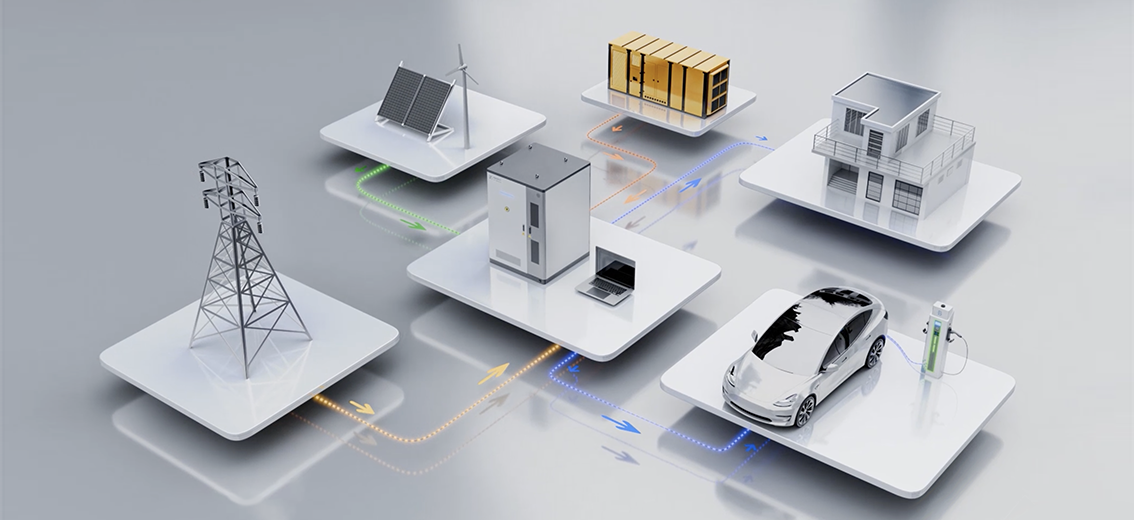
Data centers and critical facilities cannot treat a battery energy storage system as a larger version of a conventional UPS. A UPS is designed around power quality, transfer behavior, and continuity for protected loads. A site BESS may manage demand, support renewable energy, or extend selected backup services. The two systems can complement each other, but their controls and protection must be coordinated.
Separate continuity from energy duration
List loads by allowable interruption and required duration. IT equipment may depend on an existing UPS while cooling, pumps, controls, security, or other infrastructure follows a different transfer path. Determine which loads the BESS may support, how quickly it must respond, and whether it operates in parallel with generators.
Model the complete sequence from normal grid operation through disturbance, transfer, islanded operation where designed, generator start, battery dispatch, load shedding, and grid restoration. A capacity number does not prove that protective devices and controls will execute this sequence correctly.
Coordinate the electrical architecture
commercial battery storage solutions can support demand management and selected critical loads, but the design must coordinate transfer logic, UPS systems, generators, switchgear, and operating duration. Review fault current, grounding, synchronization, transformer inrush, harmonics, power factor, and the location of each measurement and isolation point.
The energy management system should respect facility redundancy and maintenance states. If one electrical path is out of service, the BESS must not create a new single point of failure. Define local controls that preserve safe operation if the remote platform or external communications are unavailable.
Address thermal and fire safety
Battery location, separation, ventilation, gas behavior, detection, suppression strategy, emergency shutdown, and responder access require project-specific review. Use the relevant local codes and authority requirements. Request product certification and fire-test evidence that match the proposed cell, module, unit, enclosure, and installation arrangement.
Cooling and auxiliary systems need dependable power and monitoring. A BESS that supports critical loads still consumes energy for controls, HVAC, pumps, and safety systems. Include those loads in autonomy calculations and maintenance planning.
Validate the operating modes
Factory and site acceptance tests should cover charge and discharge limits, communication loss, protective trips, transfer sequences, generator interaction, UPS interaction, load steps, alarm routing, and restoration. Test maintenance bypasses and degraded configurations, not only the normal one-line diagram.
Operations teams need documented authority for dispatch, firmware changes, alarm response, and emergency isolation. Regular exercises should verify that facility staff, the storage supplier, and emergency responders share the same operating assumptions.