When a 14-Bit Absolute Encoder Matters in Mobile Robotics
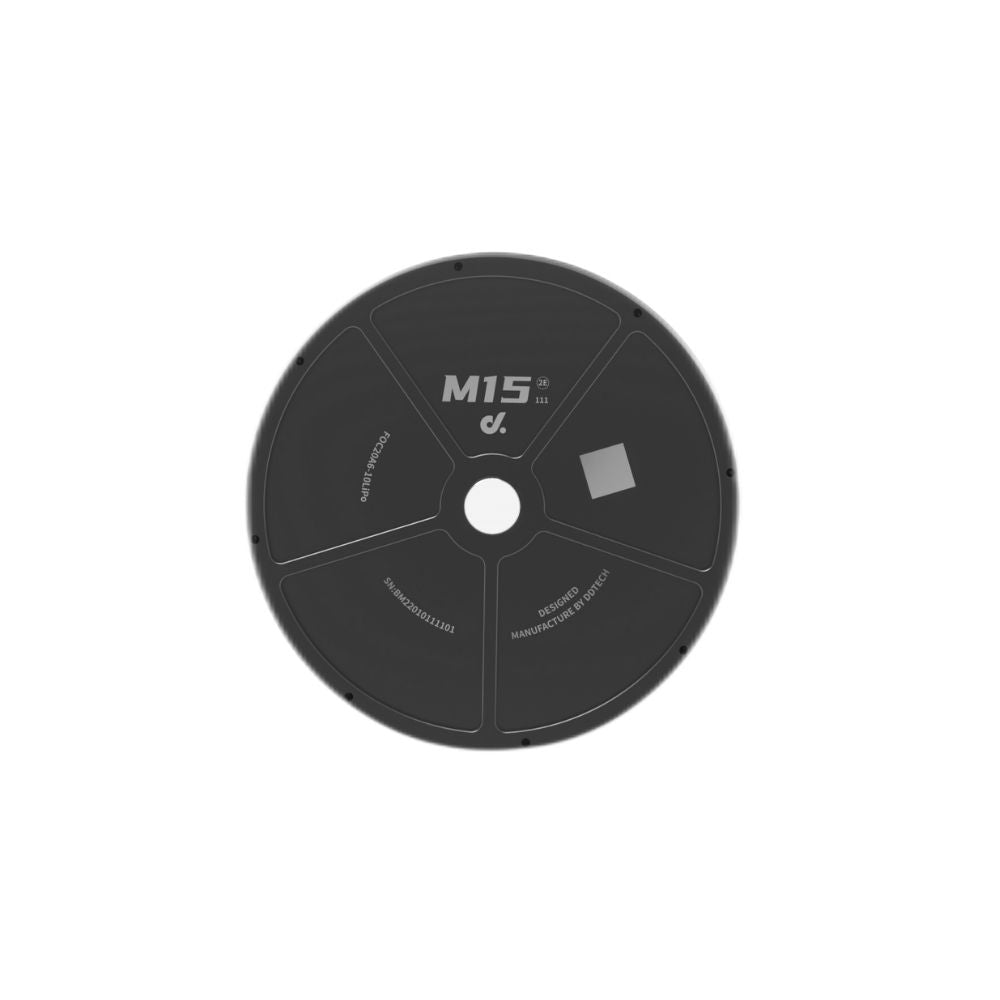
A 14-bit absolute encoder divides one shaft rotation into 16,384 unique positions, giving an angular resolution of about 0.022°. That level of feedback helps mobile robots estimate wheel movement with greater consistency during slow travel, docking, and repeated stop-and-go motion. Unlike incremental encoders, an absolute encoder reports its position immediately after power returns, reducing restart time. When paired with a properly sized drive system, including a 10 Nm stall torque motor for mobile robots, higher-resolution feedback supports smoother speed control, more stable odometry, and better navigation across warehouses, hospitals, farms, and outdoor service routes.
Mobile robots rely on several sensors, but wheel position remains one of the most frequently updated data sources. A robot traveling at 1.8 m/s with 200 mm drive wheels completes roughly 2.9 revolutions every second. With a 14-bit encoder, every revolution is divided into 16,384 measurement points, allowing the controller to detect very small changes in wheel rotation instead of waiting for larger position updates.
Because wheel data feeds into localization software, better measurements improve the quality of position estimates over time. Small differences during every wheel rotation may appear minor, yet after 500 meters of travel they become more noticeable if encoder resolution is too low. This is one reason why many autonomous mobile robots combine high-resolution encoders with IMUs, LiDAR, or vision systems instead of depending on a single sensor.
Many fleet operators prefer absolute encoders because the robot knows its shaft position immediately after startup instead of performing a homing cycle before returning to work.
That startup behavior becomes more useful when robots stop several times during a working day. Battery replacement, emergency shutdowns, or scheduled maintenance may interrupt operation. Since the encoder stores absolute position information, the controller receives valid angle data as soon as power returns. In facilities operating 100 to 500 robots, reducing restart delays by only a few seconds per robot can save many minutes of total downtime each shift.
Different encoder resolutions also produce different measurement intervals.
| Encoder Resolution | Positions per Revolution | Angular Resolution |
|---|---|---|
| 10-bit | 1,024 | 0.3516° |
| 12-bit | 4,096 | 0.0879° |
| 14-bit | 16,384 | 0.0220° |
| 16-bit | 65,536 | 0.0055° |
Higher resolution alone does not guarantee better navigation. Tire wear, floor material, wheel slip, and gearbox backlash also affect robot movement. For many indoor applications, however, 14-bit resolution provides a practical balance between measurement quality, processing requirements, and communication speed without increasing system complexity more than necessary.
As encoder feedback becomes more accurate, motor control also benefits. Many brushless servo systems use continuous position information for current regulation and low-speed operation. A motor can respond more smoothly when the controller receives finer position updates, especially below 50 rpm, where coarse feedback often produces uneven motion.
This relationship becomes more important when the drive system includes components designed for precise movement. A 10 Nm stall torque motor for mobile robots can generate substantial holding force during docking, lifting, or slow positioning tasks, but stable motion also depends on accurate feedback. Combining both elements allows the controller to make smaller speed adjustments while maintaining repeatable movement. Engineers evaluating integrated drive solutions often compare encoder specifications together with motor characteristics, gearbox options, and communication interfaces. One example is the 10 Nm stall torque motor for mobile robots, which can be matched with high-resolution feedback for applications requiring smooth low-speed performance.
Position feedback becomes more useful when it is matched with the mechanical characteristics of the complete drive system rather than evaluated by resolution alone.
Communication speed is another consideration. Modern absolute encoders commonly support interfaces such as SSI, BiSS-C, CANopen, EtherCAT, or RS-485. Faster communication reduces delay between encoder measurement and controller response. At control frequencies of 1 kHz or higher, lower communication latency helps synchronize left and right wheel motion, particularly during curved paths or narrow corridor navigation.
Outdoor robots place additional demands on encoder reliability. Agricultural machines, inspection platforms, and autonomous delivery vehicles may experience rain, dust, vibration, and temperatures ranging from -20°C to 70°C depending on hardware design. Non-contact magnetic sensing is widely used because it tolerates contamination better than optical components in many industrial environments while requiring less maintenance over long operating periods.
The same encoder information also supports navigation software. Sensor fusion algorithms compare wheel movement with IMU measurements and external references such as LiDAR or cameras. When wheel position is measured more accurately, the software begins each calculation with better motion data before external corrections are applied. This improves repeatability during low-speed turns, charging station alignment, pallet pickup, and narrow aisle navigation.
Many manufacturers specify repeatability targets of only a few millimeters for indoor autonomous mobile robots. Meeting those targets depends on the complete system rather than one component. Wheel diameter, suspension design, motor response, controller update rate, encoder resolution, and software tuning all contribute to the final result. A 14-bit absolute encoder provides detailed position information that fits well within this combination, making it a common choice for mobile robots expected to operate continuously throughout 2025 and beyond.