What Should You Look for in Wholesale Coffee Packaging?
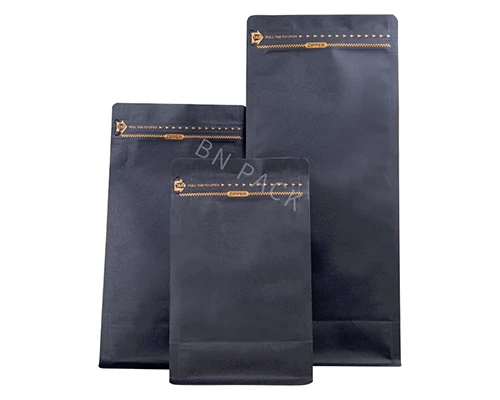
Wholesale coffee packaging should be selected around oxygen control, moisture resistance, degassing, seal strength, filling equipment, storage time, transport conditions, and total landed cost. Research reviewed by the Specialty Coffee Association reports that lowering oxygen to 0.5% in packaged coffee was associated with a 20-fold increase in shelf life in one study, while another study found vacuum-packed coffee staled at roughly one-fifth the rate of beans packed in air. A supplier should also provide food-contact documentation, production samples, consistent dimensions, and clear specifications for every batch.
Roasted coffee starts changing as soon as it leaves the roaster. The SCA notes that whole-bean coffee loses carbon dioxide rapidly during roughly the first 20 days after roasting, while ground coffee can lose CO₂ much faster because grinding exposes far more surface area.
For a wholesale buyer, packaging therefore needs to control the conditions around the coffee rather than simply provide a printed outer layer. Oxygen transmission, water-vapor transmission, film construction, seal integrity, valve performance, and storage temperature should be reviewed together.
One SCA-reviewed study reported that reducing oxygen inside a coffee container to 0.5% could increase shelf life by 20 times.
A practical specification should start with the product:
| Coffee format | Packaging point to check | Typical wholesale concern |
|---|---|---|
| Whole bean | Degassing valve + barrier | CO₂ release after roasting |
| Ground coffee | Higher oxygen protection | Faster freshness loss after grinding |
| 250–340 g retail | Shelf appearance + reseal | Consumer opening frequency |
| 500 g retail | Stability + zipper | Repeated household use |
| 1 kg foodservice | Seal + puncture resistance | Higher package weight |
| Multi-pack shipment | Carton strength | Compression during transport |
Material selection comes next. Many commercial coffee bags use multilayer structures because no single film normally provides every property required for barrier protection, strength, printing, sealing, and handling. Buyers should ask for the exact material construction instead of accepting descriptions such as “premium” or “high barrier.”
Measured specifications are more useful than marketing language. Oxygen transmission rate (OTR) and water vapor transmission rate (WVTR) should be requested where available, together with the test method and test conditions. Comparing two bags without comparable testing conditions can produce misleading results.
The SCA has documented packaging work showing that porous structures allow oxygen to enter more easily, while aluminum-containing barrier structures can substantially limit oxidation. In one small packaging study discussed by the SCA, only six bags were assessed and three had seal leaks, showing why seal quality can affect the interpretation of packaging performance.
That finding leads naturally to the bag's seal area. A strong barrier film does not protect coffee well if the top seal leaks.
Request the supplier's information for:
-
seal width and recommended temperature range;
-
zipper and tear-notch position;
-
film thickness;
-
puncture resistance;
-
dimensional tolerance;
-
valve location;
-
acceptable print and sealing defects.
For a 20,000-piece order, even a 1% reject rate would represent 200 unusable bags. A 2% rate would raise that figure to 400 units before filling losses, freight, or warehouse handling are considered.
A one-way degassing valve deserves separate attention because freshly roasted coffee releases CO₂. Without a suitable gas-release method, internal pressure can increase after filling. The valve must release gas while limiting outside air entry, and its position must work with the bag design and filling line.
The exact valve specification should be matched to roast timing, bag volume, coffee format, and sealing process. A small 250 g pouch and a 1 kg bag do not necessarily require the same valve behavior.
The SCA reports that CO₂ buildup in valve bags during the first week after roasting can lower the oxygen concentration inside the package and slow oxidation.
For coffee brands using kraft coffee bags, the outer appearance should still be evaluated separately from the barrier layer. A kraft-look surface can provide a natural visual style, but paper appearance alone does not tell you how well the inner structure controls oxygen or moisture.
Ask whether the bag is paper-based only in appearance or whether paper forms part of a multilayer laminate. Also confirm whether the printed surface, adhesive system, inner film, zipper, and valve are suitable for direct food-contact use where applicable.
In the United States, FDA maintains an inventory of food-contact substances and identifies regulations governing substances used in food-contact applications. The applicable status depends on the specific material, substance, intended use, and conditions of use.
Printing also affects purchasing cost. Digital printing can suit brands with several coffee varieties and smaller runs, while other printing methods may become more economical at larger quantities. Comparing only the unit price can hide setup charges or large minimum quantities.
Consider a simple quotation example:
| Item | Supplier A | Supplier B |
|---|---|---|
| Bag price | $0.18 | $0.23 |
| MOQ | 50,000 | 10,000 |
| Initial packaging spend | $9,000 | $2,300 |
| Artwork versions | 1 | 4 |
| Setup fee | $600 | $0 |
| Estimated freight | $1,000 | $500 |
| Effective initial spend | $10,600 | $2,800 |
At 100,000 bags, a $0.02 unit-price difference equals $2,000. That difference should be compared with setup fees, freight, inventory age, storage space, and unused stock rather than viewed alone.
Order size should also follow sales volume. A roaster selling 3,000 bags per month would hold roughly 16.7 months of inventory after purchasing 50,000 bags, before accounting for seasonal changes. A faster-growing brand may use the same quantity much sooner.
Lead time matters for the same reason. Ask for production days, printing days, shipping time, inspection time, and the supplier's normal reorder window. Then determine how much packaging must remain in stock when the next purchase is placed.
Packaging dimensions should be checked with real coffee, not just an artwork file. A 340 g package, for example, can behave differently depending on bean density, roast level, grind size, fill method, and headspace.
The bag should pass through the intended filling process without excessive stretching, folding, misalignment, or seal contamination. Automated equipment can expose dimensional differences that may not be obvious during manual filling.
A useful supplier sample process can use 50 to 100 bags from the same production batch. Fill them with the intended coffee weight, seal them on the actual equipment, inspect valve placement, check zipper function, and review print alignment after handling.
For shipping validation, place packed bags inside the same cartons used for commercial distribution. Inspect a sample after transport simulation or actual shipment, especially for 1 kg formats where package weight can increase stress on seals and corners.
Storage conditions also deserve attention. A coffee package does not operate independently of temperature and humidity. The SCA has reported research comparing roasted coffee stored at 35°C and −25°C, with the lower temperature slowing off-gassing by up to 35 times in that study.
That result does not create a universal shelf-life number for every coffee product. It does show why warehouse temperature should be included when establishing packaging requirements, particularly for products expected to remain in distribution for several months.
Resealability should match how customers consume the coffee. A zipper can help when a bag is opened repeatedly, but zipper quality varies. Test alignment, closure force, repeated opening, and resistance to coffee particles.
SCA material discussing opened coffee packaging found that a smaller opening and tighter reclosing can reduce the amount of new oxygen introduced after opening.
Environmental claims should also be checked against technical documents. Terms such as recyclable, compostable, mono-material, or reduced plastic can refer to specific structures and disposal systems rather than applying universally across all markets.
Ask for the material composition and supporting documentation. If a packaging supplier changes from a multilayer structure to a simpler film, verify barrier performance again instead of assuming that a thinner structure will perform the same way.
For repeat wholesale orders, keep an approved reference sample and a written specification. Record bag dimensions, material construction, valve type, zipper, printing method, artwork version, finish, and tolerances. A 2024 or 2026 production batch should be checked against the approved sample rather than against memory.
A supplier comparison sheet can remain simple:
-
barrier data;
-
food-contact documentation;
-
valve specification;
-
dimensions and tolerances;
-
seal performance;
-
MOQ;
-
lead time;
-
printing method;
-
landed cost;
-
defect handling.
A 100-bag production trial can reveal filling, sealing, zipper, and dimensional issues before a 50,000-unit order is released. That small sample should be tested with the actual coffee and equipment whenever possible, because packaging performance depends on the full packing setup rather than the bag alone.