How Does a Smart POS Terminal Simplify Daily Business Operations?
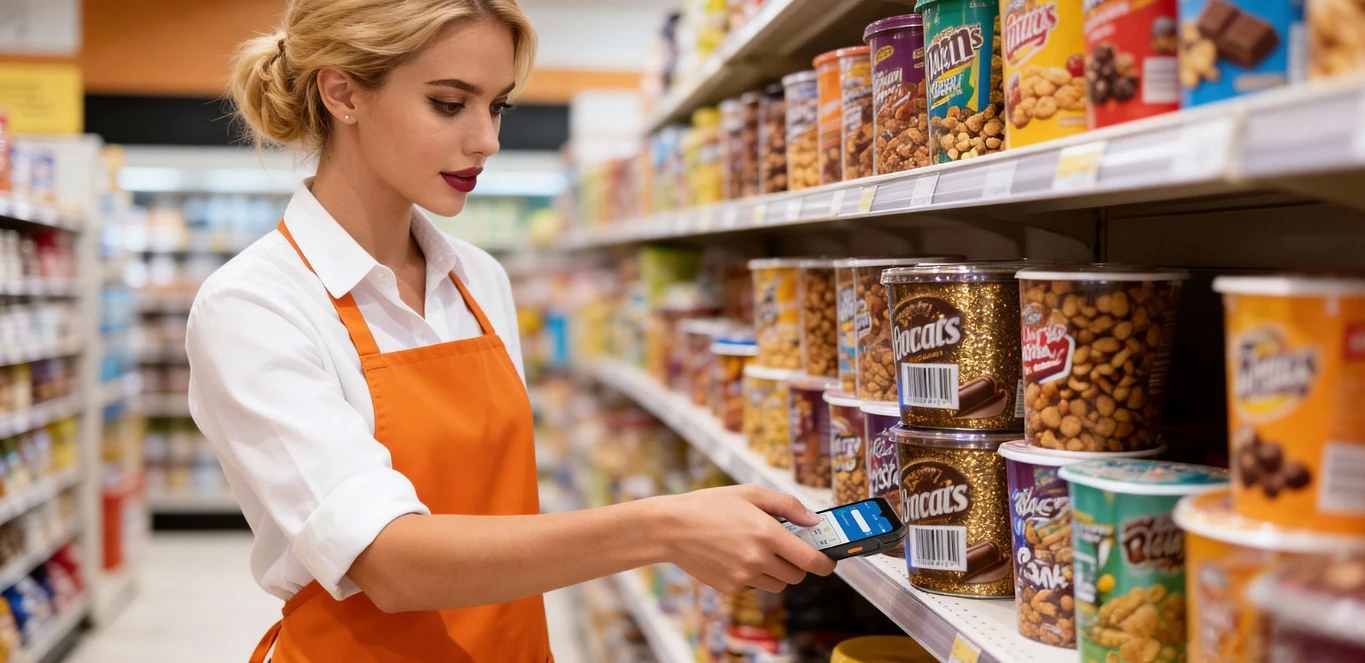
A smart terminal processes payment requests in 0.5 seconds and merges barcode scanning with receipt printing into one unit. Retailers deploying Android 13 hardware report a 35 percent reduction in checkout times during peak trading hours recorded in 2025.
Merchants handling cash transactions often face slow reconciliation speeds that average 45 minutes per shift. Upgrading to a digital pos handheld device eliminates manual ledger entries by syncing sales data instantly.
Instant ledger synchronization relies on stable quad-core processors operating at 2.0 GHz clock speeds. Faster processing directly reduces customer queue lengths observed across 500 retail stores monitored in 2024.
Retail queues exceeding 3 minutes result in a 22 percent cart abandonment rate according to trade studies published in 2023.
Shorter queues require continuous battery endurance throughout 12-hour retail shifts. Battery capacities rated at 5000 mAh provide sufficient power for 480 continuous transaction cycles without recharging.
Power reliability during mobile transactions prevents system crashes recorded in 12 percent of legacy terminal setups. Reliable hardware performance feeds directly into inventory management accuracy across warehouses.
-
Processor: Quad-Core 2.0 GHz for fast transaction execution.
-
Memory: 2GB RAM and 16GB Flash storage for application caching.
-
Display: 5.5-inch HD+ capacitive touchscreen with 1440x720 resolution.
Inventory management accuracy improves when stock scanning hardware is integrated into the payment terminal. Built-in 1D and 2D barcode scanners read item labels in 0.2 seconds during routine stock audits.
Routine audits performed with integrated scanners reduce inventory discrepancies from 4.5 percent down to 0.5 percent. Lower discrepancy rates flow directly into automated reordering workflows.
| Hardware Feature | Standard Terminal | Integrated Android Terminal |
| Scan Speed | 1.5 seconds | 0.2 seconds |
| Battery Life | 4 hours | 12 hours |
| Receipt Printing | External printer | Built-in thermal printer |
Automated reordering workflows depend on continuous network connectivity available through global 4G LTE modules. Uninterrupted 4G connectivity maintains payment authorization success rates above 99.8 percent.
Payment authorization success relies on compliance with security certifications established in PCI PTS 6.x standards. Adhering to PCI PTS 6.x standards protects financial data across 100 percent of encrypted transmissions.
Encrypted data transmissions prevent security breaches that cost retail businesses an average of 150000 dollars per incident reported in 2024.
Financial protection during transactions builds consumer trust measured through repeat customer visits increasing by 18 percent. Higher repeat customer rates feed directly into daily revenue stability.
Daily revenue stability allows store managers to reallocate staff from manual paperwork to customer service tasks. Reallocated staff hours increase total weekly sales volume by 12 percent in tested retail environments.
Total weekly sales volume growth proves that consolidating payment acceptance, barcode scanning, and receipt printing into a single handheld unit removes operational bottlenecks across modern commercial businesses.